
The best travel and tourism news from Togo
Provided by AGP
Antichi Cammini d’Italia: an integrated initiative to enhance five major pilgrimage routes through Lazio
Five historic and religious walking routes become a unified tourism and cultural system. The pillars of the project: easing pressure on traditional tourist circuits, extending the season, slow tourism, sustainability and technological innovation.
“Antichi Cammini d’Italia” is taking shape: an integrated initiative to enhance five major historic and religious pilgrimage routes that cross Italy and converge in Lazio and Rome — the Via Francigena, the Way of Saint Francis, the Way of Saint Benedict, the Romea Strata and the Via Romea Germanica. The project aims to position Italy among the world’s leading walking destinations and to strengthen the appeal of a widespread heritage that is still not fully integrated into mainstream tourism flows.
Five routes, one destination: Lazio and Rome
Three of the five routes are certified Cultural Routes of the Council of Europe: the Via Francigena since 1994, the Via Romea Germanica since 2020 and the Romea Strata since 17 June 2025. The Way of Saint Francis and the Way of Saint Benedict lead to places that are central to Franciscan and Benedictine spirituality, from the Holy Valley of Rieti to Subiaco and Montecassino. All five routes share a common point of convergence in Lazio, which forms the experiential heart of the project: from the Tuscia of Viterbo to the Holy Valley of Rieti, from the Aniene Valley to the Eternal City.
Slow tourism, sustainability and more balanced flows
“Antichi Cammini d’Italia” responds to a profound change in travel habits: the growing demand for slow, authentic and sustainable experiences. The itineraries promoted by the project offer alternatives to traditional destinations, helping to ease pressure on the most crowded tourist circuits and to extend visitor flows across a broader calendar and into lesser-known areas.
This tourism offer appeals to an increasingly diverse audience: pilgrims, walkers, cultural travellers, outdoor and wellness enthusiasts, families and people seeking a more direct relationship with local territories and their communities.
Technological innovation: smart signage
One of the project’s most distinctive features is an integrated smart signage system deployed along the five itineraries. Sixty devices provide travellers with free Wi-Fi and Bluetooth Low Energy beacon technology connected to the Italia.it app.
When visitors enter the range of a beacon, they receive a push notification inviting them to discover the stage they are on and the surrounding tourism offer: technical information on the route, geolocated maps, Point of Interest sheets and multimedia content dedicated to places of historical, artistic, religious and scenic value.
It is a model that brings together the physical experience of walking and the digital dimension, offering travellers accessible tools for orientation and deeper interpretation in real time.
Alongside this, an extensive mapping process of Points of Interest has led to the creation of more than 1,000 information sheets dedicated to churches, monuments, natural areas, squares, fountains and other identity-defining places in the territories crossed by the routes. More than 40% of the sites highlighted are outstanding assets that are still little represented in international tourism circuits: a heritage the project helps bring to light, promoting a more authentic and sustainable way of experiencing the territory. Italia.it is the system’s central digital hub, where all content comes together and becomes accessible to travellers.
Bus tours: seven itineraries across Lazio
The project also includes a program of seven bus itineraries dedicated to the Lazio sections of the five routes. Designed to offer the public an authentic experience even within a single day, they make it possible to engage with the spirit of the routes without undertaking the full walk.
Five itineraries retrace the Lazio stages of the Via Francigena, the Way of Saint Francis, the Way of Saint Benedict, the Romea Strata and the Via Romea Germanica. Two additional itineraries are dedicated to Rome: “Roma Futura,” a journey through twentieth-century and contemporary architecture, from Zaha Hadid to Renzo Piano, from the Foro Italico to EUR and Fuksas’s Nuvola; and “Churches of the Third Millennium,” exploring the capital’s new sacred architecture and enriching the Roman dimension of the project.
The tours, free of charge upon registration on Italia.it, include multisensory experiences on board, storytelling moments with performers, tastings of typical products from the territories crossed and a gift for each participant. The initiative is open to everyone — not only tourism professionals — further broadening the audience reached by the project.
International promotion, press tours and creators
The project’s promotion is being developed in Italy and abroad, with the aim of strengthening Italy’s positioning as a leading destination for slow, cultural and sustainable tourism. Target markets include Italy, Argentina and Latin America, Austria, Belgium, France, Germany, Ireland, Luxembourg, the Netherlands, the United Kingdom, Spain, the United States and Switzerland: a map that reflects both the geography of Europe’s historic routes and the spiritual and cultural appeal of Italy’s walking itineraries beyond Europe.
Integrated communication activities include press tours for Italian and international journalists, enabling media professionals to experience first-hand the Lazio stages of the routes and the slow journey through the Tuscia of Viterbo, the Holy Valley of Rieti and the places of Franciscan and Benedictine spirituality.
In parallel, the project includes an influencer and content creator campaign in the target countries, supported by extensive multichannel and multi-format digital and print production. Through videos, social content, branded content and native formats designed for digital audiences, the campaign tells the story of the five ancient walking routes of Italy and invites people to discover them.
Project funded by the European Union - Next Generation EU «Antichi Cammini d'Italia», PNRR - Mission M1C3 Investment 4.3 Measure 274 - the ITALIAN MINISTRY OF TOURISM is the subject operator, ENIT S.p.A. is the subject agent
press@pomilio.com
Attachments

Via_Francigena_&_Romea_Strata_APPIA_ANTICA
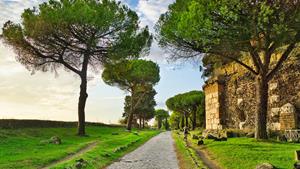
Antichi Cammini d’Italia - Via Francigena
Legal Disclaimer:
EIN Presswire provides this news content "as is" without warranty of any kind. We do not accept any responsibility or liability for the accuracy, content, images, videos, licenses, completeness, legality, or reliability of the information contained in this article. If you have any complaints or copyright issues related to this article, kindly contact the author above.
